Sinking Funds: A Beginner's Guide to Planned Savings
By Pennie at FiscallyAI • Updated • 5 min read
⚡ What Is a Sinking Fund?
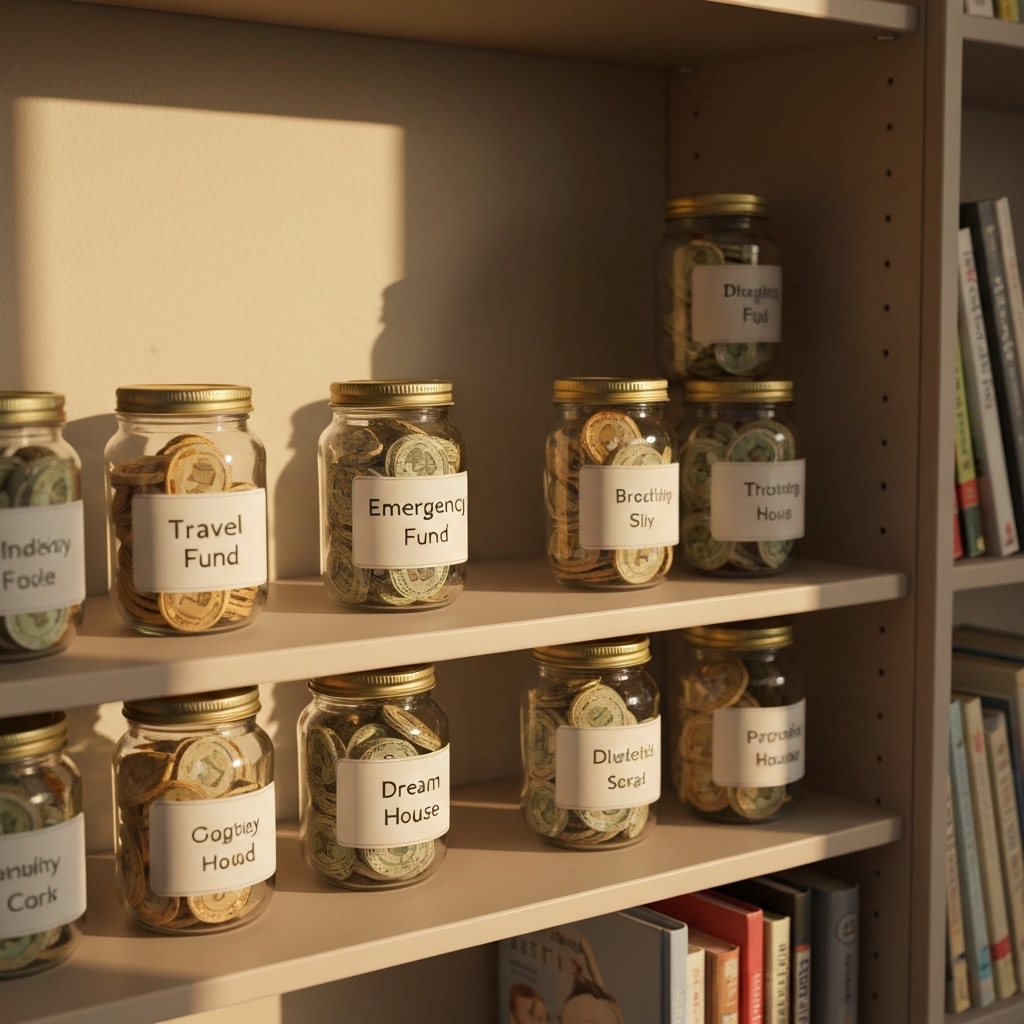
A sinking fund is money you set aside each month for a planned future expense. Unlike an emergency fund (for surprises), sinking funds are for things you know are coming: car repairs, holidays, insurance, vacations.
Why Sinking Funds Matter
Without sinking funds, every irregular expense feels like an emergency. Car registration? Emergency. Christmas gifts? Emergency. Annual insurance payment? Emergency. Your emergency fund should be reserved for true surprises, not predictable expenses.
Sinking funds turn these “emergencies” into planned, stress-free events. You’ve been saving $50/month for car repairs, so when your car needs $600 of work, you have the money.
How Sinking Funds Work
- Identify an upcoming expense: Something you’ll need to pay for eventually
- Estimate the cost: Your best guess at the total amount
- Set a timeline: When will you need the money?
- Calculate monthly savings: Cost ÷ months = monthly contribution
- Save separately: Keep these funds separate from regular spending money
Example: Car Repairs
- Estimated annual car repairs: $1,200
- Monthly contribution: $1,200 ÷ 12 = $100/month
- Result: You always have money for car repairs
Common Sinking Fund Categories
| Category | Typical Annual Cost | Monthly Savings |
|---|---|---|
| Car Maintenance | $500-$1,500 | $40-$125 |
| Car Insurance (if paid annually) | $800-$2,000 | $65-$165 |
| Holiday Gifts | $500-$1,500 | $40-$125 |
| Vacation | $1,500-$5,000 | $125-$415 |
| Home Maintenance (owners) | $1,000-$3,000 | $85-$250 |
| Pet Expenses | $500-$1,500 | $40-$125 |
| Clothing | $300-$800 | $25-$65 |
| Medical/Dental | $500-$2,000 | $40-$165 |
Sinking Funds vs Emergency Fund
| Sinking Fund | Emergency Fund | |
|---|---|---|
| Purpose | Planned expenses | Unexpected expenses |
| Examples | Car registration, holidays, vacation | Job loss, medical emergency, major repair |
| Amount | Based on specific goal | 3-6 months of expenses |
| Replenished | Yes, continuously | Only after using |
How Many Sinking Funds Should You Have?
Start with 3-5 categories that are most relevant to your life. You don’t need a sinking fund for everything, just the expenses that tend to sneak up on you and throw off your budget.
Most common starter sinking funds:
- Car maintenance and repairs
- Holiday gifts
- Vacation
Where to Keep Sinking Funds
- High-yield savings account with “buckets”: Ally Bank and others let you create named sub-accounts
- Separate savings accounts: One account per sinking fund
- Budgeting app categories: YNAB, Monarch, and others support sinking fund tracking
Avoid keeping sinking funds in your checking account. It’s too easy to accidentally spend.
Getting Started: A Practical Example
Say you’re 24, renting an apartment, and you keep getting blindsided by the same expenses every year. A simple sinking fund setup could look like this:
- Holiday gifts ($600/year): Save $50/month starting in January. By December, you have $600 ready to go instead of scrambling with a credit card.
- Car maintenance ($1,200/year): Save $100/month. When your tires need replacing or your brakes start grinding, you’re covered.
- Vacation ($1,500/year): Save $125/month. Instead of putting a trip on a credit card and paying interest for six months, you pay cash and actually enjoy the trip guilt-free.
That’s $275/month total, spread across three accounts or sub-accounts. Is it a lot? Maybe. But it’s a lot less stressful than three surprise $600-$1,500 expenses hitting your checking account out of nowhere. And if $275 is too much right now, start with one sinking fund for the expense that stresses you out the most. You can always add more later.
What If You Run Out of a Sinking Fund?
It happens. You budgeted $100/month for car repairs, but your transmission decides to quit six months in, and the bill is $1,800. You only have $600 saved.
Don’t panic. Cover what you can from the sinking fund and figure out the rest. The point is that you had $600 you wouldn’t have had otherwise. That’s $600 less on a credit card or $600 less stress. After the expense, reset the fund and keep going. Over time, your estimates will get more accurate as you learn what things actually cost.
Sinking Funds and Budgeting Apps
If you use a budgeting app like YNAB, Monarch, or even a simple spreadsheet, sinking funds fit right in. YNAB’s entire philosophy is basically built around the sinking fund concept: give every dollar a job, including future dollars for future expenses. Most apps let you create categories for each fund and track your progress toward the goal. Even if you’re not an app person, a basic spreadsheet with columns for each fund and your running balance works fine.
Sinking Funds for Specific Life Situations
Renters
If you’re renting, your most important sinking funds are probably car maintenance (if you drive), holiday gifts, and a “move-out fund.” Moving is expensive: security deposits, first/last month rent, movers or a rental truck, new furniture. Having $2,000 to $3,000 saved specifically for your next move means you can take a better apartment when one comes up instead of staying somewhere you’ve outgrown because you can’t afford to move.
Pet Owners
Pets are expensive in predictable ways that many owners treat as surprises. Annual vet checkups, vaccinations, flea and tick prevention, and grooming all happen on a schedule. A pet sinking fund of $50 to $100 per month covers routine costs and builds a cushion for the bigger expenses (dental cleaning, unexpected illness) that hit every couple of years. According to the ASPCA, annual dog ownership costs range from $1,500 to $2,500 depending on size, and cats run $1,000 to $1,500.
Homeowners
Homeownership multiplies your sinking fund needs. The general rule is to save 1% to 2% of your home’s value annually for maintenance. A $300,000 home means $3,000 to $6,000 per year in maintenance savings. Specific funds might include: roof replacement (these last 20 to 30 years, but cost $8,000 to $15,000 when they go), HVAC replacement ($5,000 to $10,000 every 15 to 20 years), and appliance replacement (major appliances last 10 to 15 years on average).
Freelancers and Gig Workers
If your income varies, sinking funds are even more critical. Add a “tax fund” to your list: set aside 25% to 30% of every payment for quarterly estimated taxes. Also consider an “income gap fund” specifically for months when work is slow. This is separate from your emergency fund, which covers true emergencies. An income gap fund is for the predictable reality that freelance income isn’t steady.
When Sinking Funds Feel Like Too Much
If tracking five or six separate funds feels overwhelming, simplify. Some people use just two funds: “predictable expenses” and “fun stuff.” The first covers car maintenance, insurance, medical costs, and home repairs. The second covers vacations, gifts, and entertainment. You lose some precision, but you gain simplicity, and simple systems are the ones people actually stick with.
Another approach: use one high-yield savings account and track your sinking fund balances in a spreadsheet. You don’t need separate bank accounts for each fund. As long as you know how much is earmarked for what, one account works fine. Ally Bank, Capital One 360, and Marcus by Goldman Sachs all offer buckets or sub-accounts that make this easy without needing multiple accounts.
Sinking Funds vs Zero-Based Budgeting
If you use zero-based budgeting, sinking funds fit naturally. In a zero-based budget, every dollar has a job. Sinking fund contributions are just another job for your dollars: “$100 goes to car maintenance, $50 goes to holiday gifts.” YNAB, the budgeting app most associated with zero-based budgeting, is essentially built around this concept. Every category in YNAB is a sinking fund of sorts.
Even if you use the 50/30/20 budget method, sinking funds work. They just come out of different buckets. Car insurance is a “need” (50%), vacation is a “want” (30%), and saving for a future down payment is “savings” (20%).
Tips for Success
- Be realistic about amounts: Underestimating defeats the purpose
- Automate contributions: Set up automatic transfers on payday
- Review annually: Adjust amounts based on what you actually spent
- Don’t mix with emergency fund: Keep them separate
- Start small: Even $25/month helps
- Track your balances: A simple spreadsheet or app works
- Celebrate when a sinking fund covers a big expense: That’s the whole point
Related Tools
Related Guides
- Savings Hub
- Emergency Fund Guide
- 50/30/20 Budget Guide
- How to Make a Budget: Complete Guide
- How to Save Money in Your 20s
Disclaimer: This content is for educational purposes only. Not financial advice. See our full disclaimer.