How to Stop Overspending on Takeout and Food Delivery
By Pennie at FiscallyAI • Updated • 10 min read
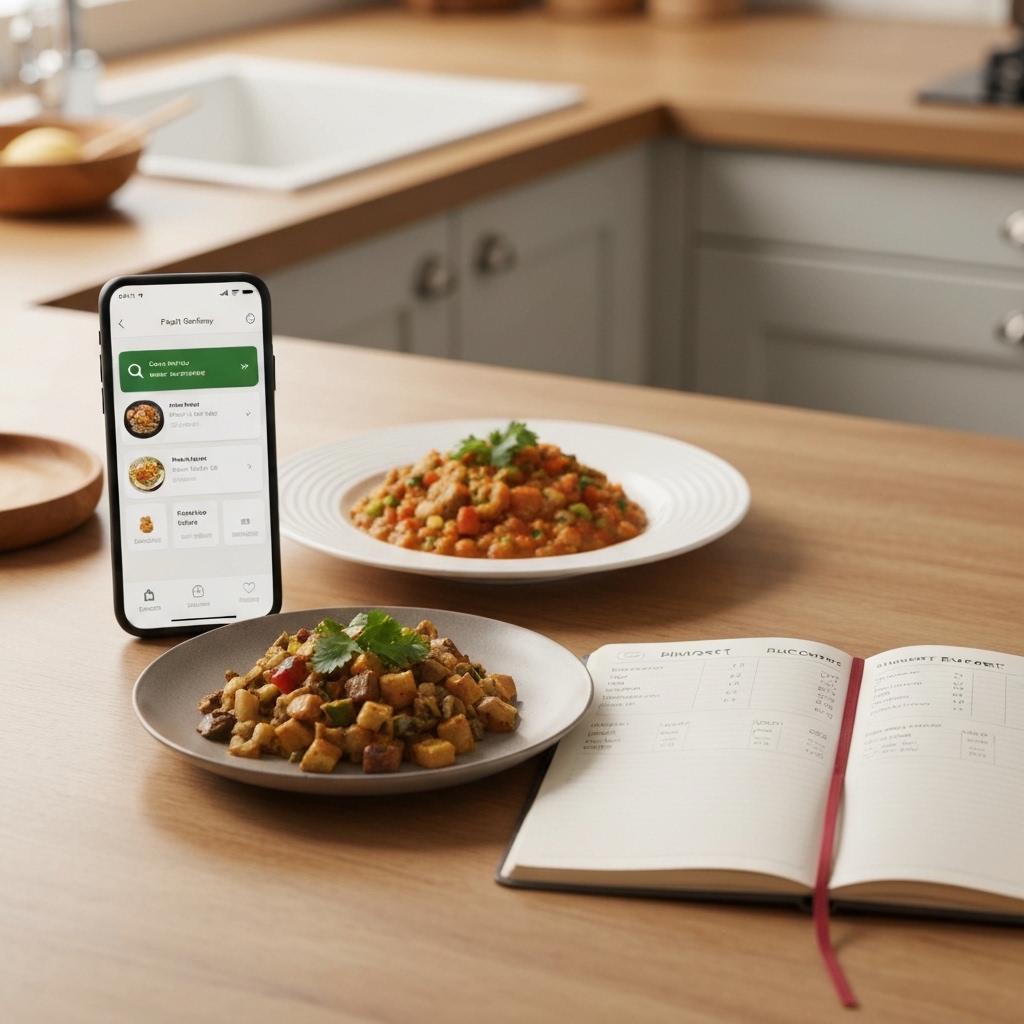
I’m Pennie, and I’ve been there with the DoorDash receipts
No judgment here. Food delivery is genuinely convenient, and the apps are designed to make ordering effortless. But when a quick dinner turns into $200+ a month in delivery fees and markups, it’s worth finding a balance. This guide won’t tell you to never order again — it’ll help you order intentionally and keep more money for things that matter.
The Real Cost
A $15 meal becomes $25-35 after delivery fees, service charges, and tip. Order 3 times a week and you’re spending $300-400/month on food that would cost $100-150 to make at home. That difference — invested — is worth $73,000 over 20 years.
The Delivery Fee Math Nobody Talks About
Let’s break down what a typical DoorDash or Uber Eats order actually costs:
| Line Item | Amount |
|---|---|
| Food (menu price — often marked up 15-30%) | $15.00 |
| Delivery fee | $3.99 |
| Service fee | $2.50 |
| Small order fee (if under $15) | $2.00 |
| Tip | $4.00 |
| Total | $27.49 |
That same meal at the restaurant? $15 plus tip. Cooked at home? $5-8 in ingredients.
The markup isn’t just delivery fees. Restaurants raise menu prices on delivery apps by 15-30% to cover the commission they pay to the platform. So you’re paying more for the food itself, plus fees on top.
If you order delivery 3 times a week, that’s roughly $330/month or $3,960/year. Cook those same meals at home and you’d spend about $1,200/year. The difference is $2,760 annually.
Why You Keep Ordering (It’s Not Laziness)
Let’s be honest about why delivery apps are hard to quit:
Decision fatigue. After a long day, the last thing you want to do is decide what to cook, check if you have ingredients, and spend 30-45 minutes making it. The app eliminates all those decisions with one tap.
Instant gratification. You’re hungry now. Cooking takes time. The app promises food in 30 minutes.
Saved payment methods. You never physically hand over cash or swipe a card. The payment is invisible, which makes spending feel painless.
Push notifications. “Craving sushi? Get free delivery until 8 PM!” These aren’t helpful reminders — they’re marketing triggers.
Understanding the psychology helps you build defenses against it.
Strategy 1: Set a Delivery Budget (Don’t Go Cold Turkey)
Going from 5 orders per week to zero doesn’t work for most people. Instead, give yourself a realistic budget.
How to set your number:
- Check your bank statement for the last 3 months of delivery spending.
- Cut that number in half. That’s your starting budget.
- Once comfortable, reduce by another 25%.
Example: You spent $280/month on average. Your new budget is $140. That’s about 4-5 orders per month, or roughly once a week. You still get delivery sometimes — just intentionally.
Track this as a specific category in your budget. When the delivery budget is gone for the month, you cook.
Strategy 2: Add Friction to Ordering
The apps are designed to be frictionless. Add friction back.
Tactical moves:
- Delete the apps from your home screen. Move them to a folder on the last page. Having to search for the app gives you a few seconds to reconsider.
- Remove saved payment methods. Having to type in your card number every time creates a pause.
- Log out after each order. The login process adds friction.
- Turn off notifications. Those “free delivery” alerts are designed to trigger impulse orders.
- Set a 15-minute rule. When you feel the urge to order, set a timer. If you still want it in 15 minutes, order. Most cravings pass.
You’re not trying to make ordering impossible — just slightly inconvenient. That inconvenience is often enough to break the autopilot.
Strategy 3: Make Cooking Easier Than Ordering
If cooking is harder than ordering, you’ll always order. The fix isn’t willpower — it’s making the easy choice the right choice.
Batch cooking on Sunday
Spend 1-2 hours on Sunday making 4-5 meals for the week. Store in containers. When you’re tired on Wednesday, dinner is already made — you just heat it up. That’s faster than delivery.
Keep “emergency meals” stocked
These are meals you can make in under 10 minutes:
- Pasta with jarred sauce and frozen vegetables
- Rice bowls with canned beans and salsa
- Frozen stir-fry vegetables with pre-cooked rice
- Eggs, toast, and fruit
- Quesadillas with shredded cheese and whatever’s in the fridge
None of these are gourmet. They don’t need to be. They just need to be faster and cheaper than DoorDash.
Use a meal planning service (not a meal kit)
Meal planning apps like Mealime give you a week of recipes and a grocery list. The planning is done for you. You just buy the ingredients and follow the steps. This eliminates the “I don’t know what to make” problem that drives so many delivery orders.
Strategy 4: Redirect the Savings
Cutting delivery spending feels like deprivation unless you see where the money goes instead. Make the savings visible.
Try this: Every time you cook instead of ordering, transfer the difference ($15-20) to a savings account. Watch it grow.
Over a month, skipping 10 delivery orders saves $150-200. Over a year, that’s $1,800-2,400. Put that in a high-yield savings account and you’ll earn interest on your restraint.
Or direct it toward a specific goal: a vacation fund, emergency fund, or extra debt payments. When you can see $200/month going toward something meaningful instead of disappearing into delivery fees, the motivation sustains itself.
Strategy 5: Order Smarter When You Do Order
When you do use your delivery budget, minimize the damage:
Pick up instead of delivery. Most restaurants don’t mark up prices on pickup orders, and you skip delivery and service fees. A $27 delivery order becomes $15-18 for pickup.
Skip the DashPass/Uber One subscription. These seem like money-savers, but studies show subscribers order more frequently, spending more overall.
Order from restaurants close to you. Shorter delivery distances often mean lower fees.
Avoid small orders. The small order fee ($2-3) on orders under $15 makes the per-item cost even worse. If you’re going to order, make it count.
Check restaurant websites first. Some restaurants offer their own delivery or pickup at lower prices than through the apps.
The Meal Prep Starter Kit
If you’re new to cooking, you don’t need fancy equipment. Here’s what gets you started:
Essential tools ($30-50 total):
- One good pan (nonstick, 12-inch)
- One pot (for pasta, rice, soups)
- A cutting board and one knife
- A sheet pan for oven meals
- Basic spices: salt, pepper, garlic powder, onion powder, chili flakes
Starter grocery list ($40-50/week for one person):
- Rice or pasta (base for most meals)
- Canned beans (protein, cheap, lasts forever)
- Frozen vegetables (as nutritious as fresh, won’t spoil)
- Eggs (versatile, cheap, fast)
- Chicken thighs or ground turkey (can be prepped in bulk)
- Salsa, soy sauce, and olive oil (instant flavor)
You can make dozens of different meals from this list. None take more than 20 minutes. All of them cost under $3 per serving.
Social Situations and Peer Pressure
A lot of delivery spending happens socially — friends suggesting a group order, roommates splitting a delivery, or a partner who loves ordering in.
How to handle it:
- Suggest cooking together instead. It’s genuinely more fun and costs a fraction of delivery.
- If a group order is happening, set a personal spending limit and stick to it.
- Be honest: “I’m cutting back on delivery to save for [specific goal].” Most people respect a clear reason.
- For dates, suggest cooking at home as an activity. It’s more personal than waiting for a delivery driver.
For more on budgeting for social spending, see our guide on budgeting for dating and social life.
Tracking What You Actually Spend
Most people have no idea how much they spend on food delivery. The first step is awareness.
Quick audit (do this today):
- Open your bank or credit card app.
- Search for: DoorDash, Uber Eats, Grubhub, Postmates, Instacart.
- Add up the last 3 months.
- Divide by 3 for your monthly average.
That number usually shocks people. Seeing “$347/month on DoorDash” hits differently than thinking “I order sometimes.”
Your First Week Plan
Monday: Do the spending audit above. Know your number.
Tuesday: Set your monthly delivery budget (half your current average).
Wednesday: Move delivery apps off your home screen. Remove saved payment info.
Thursday: Stock emergency meals. Buy pasta, canned beans, eggs, frozen vegetables.
Saturday or Sunday: Batch cook 3-4 meals for the week. Nothing fancy — rice bowls, pasta, or sheet pan meals.
All week: Every time you cook instead of ordering, transfer $15 to savings.
The goal isn’t perfection. It’s progress. If you go from 12 delivery orders a month to 4, you’ve saved over $200/month. That’s real money heading toward your savings goals instead of service fees.
One meal at a time. You’ve got this.
Disclaimer: This content is for educational purposes only and is not personalized financial advice. Always consult a qualified professional for advice specific to your situation. See our full disclaimer.