AI Personal Finance Tools That Work for Newcomers to Canada With No Credit History
By Pennie at FiscallyAI • Updated • 12 min read
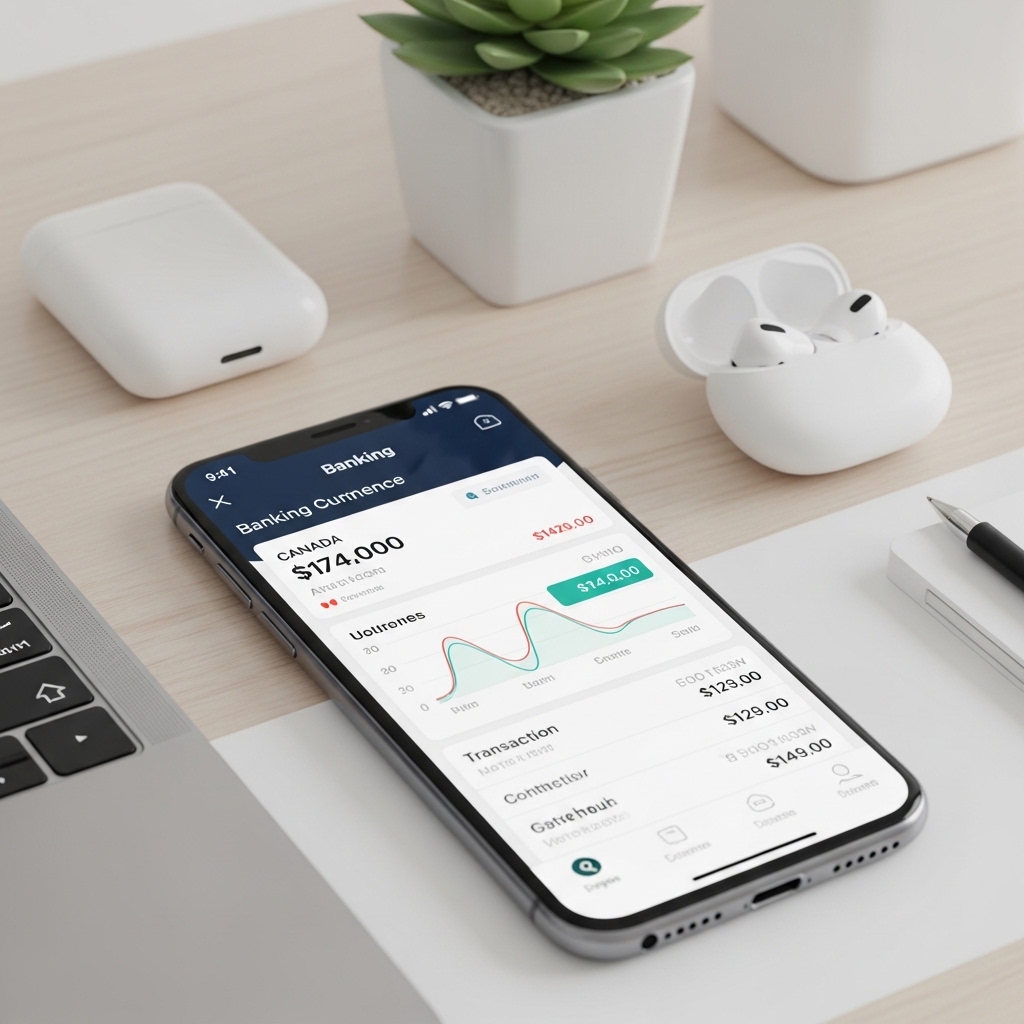
Moving to Canada means starting your financial life from scratch. Your savings may have transferred, but your credit history did not. Your financial habits are intact, but the systems, products, and strategies that served you in your home country may not apply here. And the financial advice you find online is often written for people who grew up in the Canadian system and have a decade of credit history.
This guide is written specifically for newcomers — permanent residents, work permit holders, international students, and refugees — who need to build a financial foundation in Canada using the tools available right now.
The Newcomer Financial Starting Point
When you arrive in Canada, your financial situation is characterized by several specific challenges that Canadian-born residents do not face:
Zero credit history. Canadian credit bureaus (Equifax and TransUnion) do not import credit history from other countries. Whether you had perfect credit in India, Nigeria, the Philippines, or Germany, you start in Canada with no score at all. Not a low score — no score. This affects your ability to rent apartments, get a phone plan, qualify for credit cards, and eventually obtain a mortgage.
Unfamiliar financial system. The banking structure, tax system, government benefits, and financial products in Canada differ from those in most other countries. Terms like TFSA, RRSP, RESP, GST/HST credit, and CCB (Canada Child Benefit) have no equivalents in many countries.
Currency conversion and remittance costs. Many newcomers send money to family members in their home country. Currency conversion fees, wire transfer costs, and exchange rate markups consume significant amounts of money that could otherwise be saved or invested.
Income gap. Many skilled immigrants accept lower-paying positions initially while their credentials are recognized or while they gain Canadian work experience. Budgeting on a temporarily reduced income while managing settlement costs (deposits, furniture, winter clothing, transit) requires careful planning.
Step 1: Set Up Your Financial Foundation (Week 1 to 2)
Open a Canadian bank account
Most major Canadian banks have newcomer-specific account packages with waived fees for the first year. These include:
- RBC Newcomer Advantage: Free banking for one year, free credit card with no Canadian credit history required
- TD New to Canada Banking Package: Waived fees, secured credit card available
- Scotiabank StartRight: Free daily banking for three years, credit card available for newcomers
- CIBC Newcomer Banking Bundle: Free banking for one year
You can open a newcomer account with your immigration documents (permanent residence confirmation, work permit, or study permit), a government-issued ID from your home country, and a Social Insurance Number (SIN) application or temporary SIN.
Get a SIN immediately
Apply for a Social Insurance Number at a Service Canada office as soon as possible after arrival. You need a SIN to work, file taxes, and access most financial products. The application is free and the SIN is typically issued same-day.
Start tracking expenses immediately
Even before you have a full budget, track what you spend during the settlement period. The first 30 days involve unusual expenses (deposits, initial grocery stock, winter gear, transit passes) that do not represent your ongoing budget. Tracking them separately helps you establish a realistic ongoing budget once the settlement spending stabilizes.
A simple AI budgeting tool like Cleo or Monarch (described in our AI budgeting tools for ADHD guide) works for basic expense tracking from day one. Connect your new Canadian bank account and let the app categorize your spending automatically.
Step 2: Build Credit (Month 1 to 6)
Building credit in Canada is a process, not an event. It requires at least 6 months of credit activity to generate a score, and 12 to 18 months to reach a score that qualifies you for standard financial products.
Secured credit cards
A secured credit card is the standard starting point for newcomers with no credit history. You provide a security deposit ($300 to $2,500 is typical) that becomes your credit limit. The bank reports your payment activity to the credit bureaus, and responsible use builds your credit score over time.
How to use a secured card for credit building:
- Use the card for one or two small recurring purchases (a phone bill, a streaming subscription — something that totals $50 to $100/month)
- Pay the full statement balance by the due date every month, without exception
- Keep utilization below 30 percent of your limit (if your limit is $500, keep the balance below $150 at statement time)
- Do not close the card or apply for multiple cards in the first six months
After 6 to 12 months of responsible use, most banks will either upgrade your secured card to a regular card (returning your deposit) or approve you for a new unsecured card based on your now-established credit history.
For more on building credit from zero, see our build credit at 18 without a credit card guide — the strategies apply equally to newcomers of any age.
Credit-building apps and tools
Koho: A Canadian fintech that offers a prepaid Mastercard with optional credit-building features. The Credit Building feature reports your subscription payments to Equifax, helping establish credit history without a traditional credit card. Monthly fee of $7 to $9 for the credit building tier.
Borrowell: Free credit score monitoring using your Equifax score. Borrowell also provides AI-powered recommendations for credit products you are likely to qualify for based on your current score and profile. Useful for tracking your credit score growth over the first year.
Credit Karma: Free credit monitoring using your TransUnion score. Provides educational content about credit management and recommendations for financial products.
For understanding how your credit score works, see our credit utilization ratio guide and how to improve credit score fast guide.
Step 3: Budget for Canadian Life (Month 1 to 3)
Canadian expenses differ from what many newcomers expect. A realistic budget for the first year accounts for costs that are unique to Canadian life.
Expenses that surprise newcomers
Winter clothing and gear: Budget $300 to $800 per person for a winter coat, boots, gloves, hat, and layers. This is not optional in most of Canada — it is a safety requirement. Thrift stores (Value Village, Salvation Army) and Facebook Marketplace offer winter gear at significant discounts.
Mobile phone plans: Canadian mobile plans are among the most expensive in the developed world. Budget $35 to $70/month for a plan with adequate data. Providers like Public Mobile, Lucky Mobile, and Freedom Mobile offer lower-cost options than the Big Three (Bell, Rogers, Telus).
Transportation: Outside of Toronto, Montreal, and Vancouver, most Canadian cities have limited public transit. Budget for transit passes ($80 to $120/month in most cities) or eventual car ownership (insurance alone runs $150 to $300/month for new drivers).
Heating costs: If utilities are not included in your rent, heating costs from October through April can add $100 to $300/month depending on the province, housing type, and heating fuel.
Provincial health insurance gaps: Most provinces have a waiting period (typically 3 months) before provincial health insurance coverage begins. Private bridge insurance costs $75 to $200/month per person during this gap.
Creating a newcomer budget
The 50/30/20 framework provides a starting structure, but newcomers should expect to spend more than 50 percent on needs during the first year while settlement costs are ongoing.
A more realistic newcomer allocation for the first year:
- 60 to 65 percent: Needs — rent, food, transportation, utilities, phone, insurance
- 15 to 20 percent: Settlement costs — credential recognition fees, language classes, professional association memberships, winter gear, furniture
- 10 to 15 percent: Savings — emergency fund priority (see below)
- 5 to 10 percent: Personal spending — social activities, entertainment, maintaining connections to home country
After the first year, as settlement costs decrease and income potentially increases, the budget should shift toward the standard 50/30/20 allocation.
Step 4: Build an Emergency Fund (Month 3 to 12)
An emergency fund is more critical for newcomers than for established Canadians, because newcomers have fewer safety nets. You may not yet qualify for Employment Insurance (EI). You may not have family nearby who can provide temporary support. You may face unexpected costs related to immigration (document fees, medical exams, legal consultations).
Target: 3 months of essential expenses in a high-yield savings account. If your essential monthly expenses are $2,500, aim for $7,500 in a HISA.
Where to keep the emergency fund: High-interest savings accounts at digital banks (EQ Bank, Tangerine, Simplii Financial) offer 2 to 5 percent interest rates — significantly higher than the Big Five banks. There is no risk to your principal (these accounts are CDIC insured), and the higher interest helps your emergency fund grow faster.
For more on emergency funds, see our build an emergency fund from scratch guide and how much emergency fund you need guide.
Step 5: Understand Canadian Tax Obligations (Year 1)
Canada’s tax system is different from most countries, and understanding it early prevents costly mistakes.
File taxes even with low income
Newcomers should file a Canadian tax return for their first year even if they earned little or no income. Filing unlocks:
- GST/HST credit: A quarterly payment of up to $496/year for individuals (2026 amounts) based on income.
- Canada Child Benefit: Up to $7,787 per child under 6 and $6,570 per child 6 to 17 (2026 amounts), based on family income. This is a substantial benefit for newcomer families.
- Provincial benefits: Various provincial credits and benefits that require a filed tax return.
These benefits represent potentially thousands of dollars that newcomers miss by not filing. Many newcomers assume they do not need to file because they did not earn much. Filing is free through volunteer tax clinics and CRA’s free file program.
Foreign income reporting
If you received income from your home country after becoming a Canadian tax resident, that income is reportable on your Canadian tax return. Canada taxes residents on worldwide income. AI tax tools like Wealthsimple Tax (free) and TurboTax can guide you through foreign income reporting, but complex situations (foreign rental properties, foreign pensions, foreign business income) warrant a consultation with a tax professional experienced in newcomer situations.
TFSA and RRSP contribution room
TFSA room accumulates from age 18 for Canadian residents. If you arrived in Canada at age 30, you do not have 12 years of accumulated room — you have room only from your first year of residency onward. In 2026, that means $7,000 of TFSA room for your first year.
RRSP room is 18 percent of your earned income from the previous year. In your first year, you have no RRSP room because you had no Canadian earned income the year before. RRSP room begins accumulating in your second tax year.
For investing guidance, see our how to start investing in your 20s guide and dollar cost averaging explained guide.
AI Tools That Help Newcomers Specifically
Koody (Canada-specific)
Koody is a Canadian fintech app designed specifically to help newcomers and Canadians manage their finances. It provides account aggregation, budgeting, and AI-powered financial recommendations tailored to the Canadian financial system.
What makes Koody useful for newcomers: it explains Canadian financial concepts in context (what is a TFSA, why credit score matters, how the GIS/OAS system works) and provides recommendations based on your immigration status and time in Canada.
Wealthsimple (investing and taxes)
Wealthsimple offers a newcomer-friendly ecosystem: investing (robo-advisor or self-directed), free tax filing (Wealthsimple Tax), and a cash account with competitive interest. The robo-advisor accepts newcomers with a SIN and Canadian bank account — no credit history required.
Wealthsimple Tax is the most user-friendly free tax filing option in Canada and handles straightforward newcomer returns (employment income, basic deductions, benefit claims) well.
Wise (formerly TransferWise)
For newcomers who send money to family in their home country, Wise provides currency conversion at the mid-market rate with transparent fees. AI tools within the app suggest optimal timing for transfers based on exchange rate trends (though the accuracy of these predictions is debatable).
The savings compared to bank wire transfers are significant: a $1,000 transfer through a Canadian bank typically costs $25 to $45 in fees plus 2 to 4 percent in exchange rate markup. The same transfer through Wise costs approximately $5 to $15 with near-zero exchange rate markup.
The First-Year Financial Roadmap
Month 1: Open bank account, apply for SIN, get secured credit card, start expense tracking
Month 2 to 3: Establish a budget based on actual spending data, automate bill payments, begin emergency fund savings
Month 4 to 6: Monitor credit score growth (Borrowell or Credit Karma), maintain perfect payment history, adjust budget as income stabilizes
Month 7 to 12: Reach 3-month emergency fund target, explore TFSA for any savings beyond emergency fund, research credential recognition process if applicable
Year 2: File first Canadian tax return (claim all benefits), begin RRSP contributions if income supports it, evaluate upgrading from secured to unsecured credit card, consider longer-term investing
Frequently Asked Questions
Can I transfer my credit history from my home country?
Generally, no. Canada’s credit bureaus maintain separate databases from other countries. However, HSBC has a program that considers your international banking relationship when evaluating Canadian credit products. RBC’s newcomer program also offers credit products without Canadian credit history.
Should I open accounts at multiple banks?
Starting with one primary bank simplifies your financial management. After your first year, when you have established banking history and credit, you can open accounts at additional institutions for better interest rates (EQ Bank for savings) or better investment products (Wealthsimple for investing) while keeping your primary bank for daily banking.
How much money should I bring to Canada for initial settlement?
Federal guidelines suggest $3,000 to $15,000 depending on family size, but practical experience suggests more is better. A single person should budget $5,000 to $10,000 for the first three months including rent deposits, furniture, winter clothing, transit, and living expenses before the first paycheck.
Are there free financial literacy programs for newcomers?
Yes. ABC Life Literacy offers free financial literacy programs. Many settlement agencies (like the Immigrant Services Association or local newcomer centres) provide free financial orientation workshops. Credit Canada offers free financial counseling. These services are available in multiple languages in most major cities.
What is the biggest financial mistake newcomers make?
Taking on debt too quickly. Once credit becomes available (usually 6 to 12 months after arrival), some newcomers overextend with credit cards, car loans, or furniture financing. The interest costs on consumer debt are high, and falling behind on payments damages the credit score you worked months to build. Maintain the frugal habits that got you through the settlement period even after credit becomes available.
Disclaimer: This content is for educational purposes only and is not personalized financial advice. Always consult a qualified professional for advice specific to your situation. See our full disclaimer.